Which fire extinguisher system do I need?
Whether you’re heading to your first track day, building a dedicated track car or preparing a vehicle for competitive motorsport, having the correct fire extinguisher or fire suppression system is an essential part of your safety equipment.
- Track days – as a general rule in the UK, there is no regulations saying you have to have an extinguisher for track days, however at minimum we would recommend having a handheld AFFF extinguisher secured within easy reach of the driver in case of any engine bay, or underbody fires whilst out on track. The extinguisher should be:
- Suitable for the types of fire that could occur in the vehicle.
- Correctly secured using an appropriate mounting system.
- Accessible to the driver.
- Within its required service period.
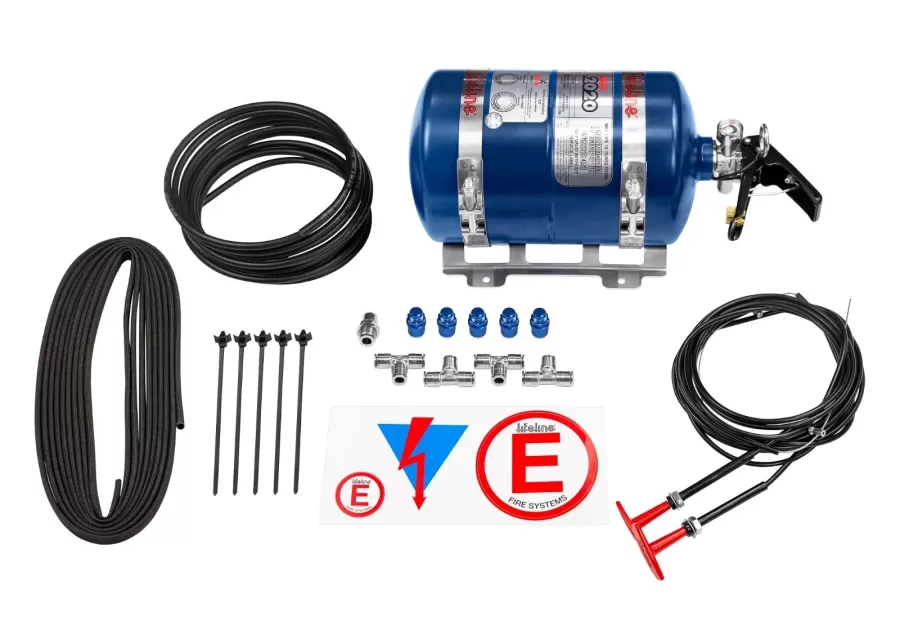
Of course, fitting a plumbed in system with a larger capacity is possible and sensible should you wish the extra peace of mind. Our range of Lifeline Zero 2020 systems are ideal for this.
- Racing – when racing you will need a plumbed in system. The minimum rules around this are generally governed by the Motorsport UK NCR’s. However the specification of this system can vary depending on the specific event or race series you enter. Typically for Club and National level racing in the UK, a 3 litre plumbed in fire suppression system such as our Lifeline Zero 2020 or Lifeline Zero 360 is required. However, we recommend you check the regulations of the series to make sure your system complies with the rules. Some FIA events for example require both a plumbed in and a handheld extinguisher to be fitted.
Whichever system you choose, its important to remember that the system needs to be serviced every two years as a minimum, regardless of whether it has been used.
Different types of plumbed in extinguishers:-
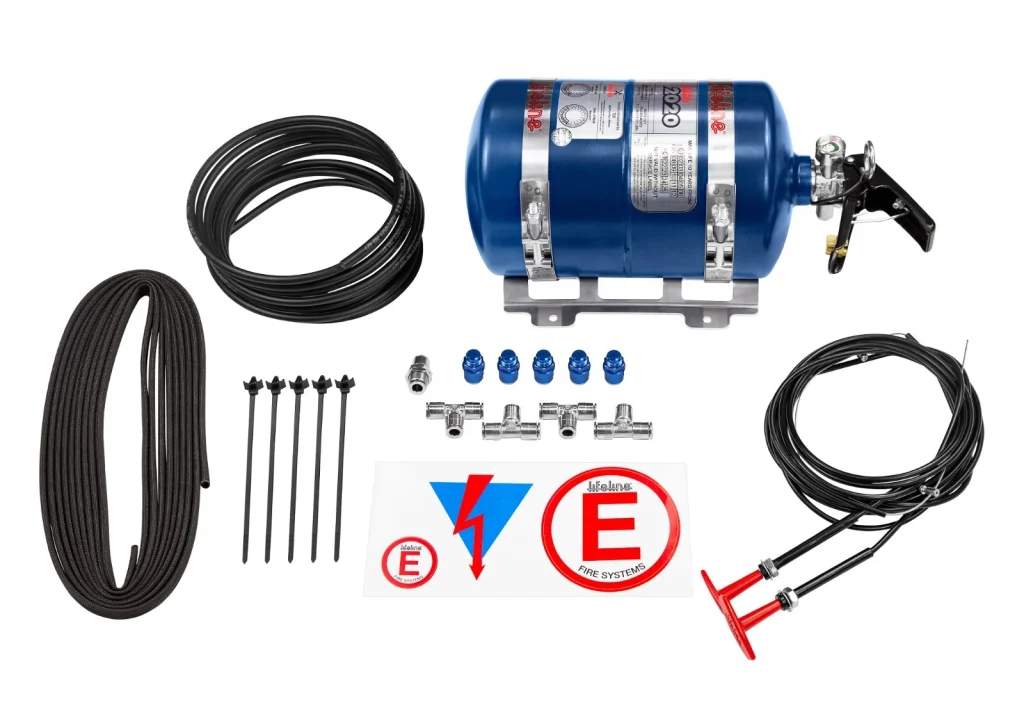
The Zero 2020 is one of the most widely used options in the Lifeline range and is designed for motorsport applications including circuit racing and rallying.
It is available in different configurations, including mechanically and electrically operated versions, allowing the system to be specified according to the vehicle and installation requirements.
The Zero 2020 uses a water-based foam extinguishant and a misting-nozzle system designed to provide coverage to both the cockpit and engine bay. For many competition-car builds, it provides a practical solution where a regulation-compliant plumbed-in system is required.
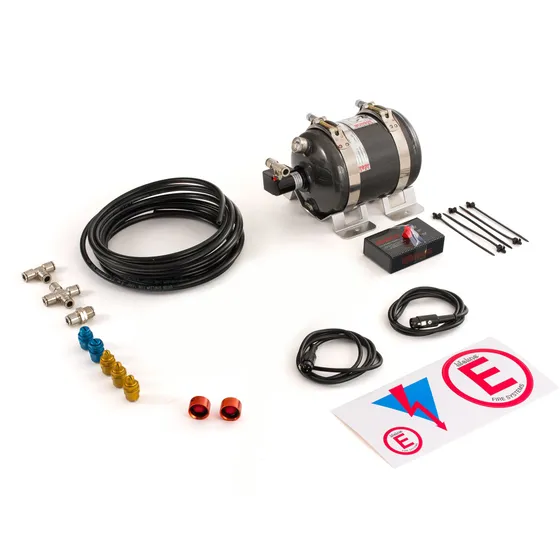
For customers where weight, space and residue are important considerations, the Lifeline Zero 360 provides an alternative approach. This extinguisher uses FK-5-1-12 clean-agent extinguishant, which leaves little residue following discharge. This can be particularly attractive for competition cars containing expensive electrical and mechanical components.
Its compact and lightweight design makes it suitable for applications where packaging and weight are important considerations.
As with any motorsport fire system, the exact specification needs to be checked against the regulations applicable to the vehicle.
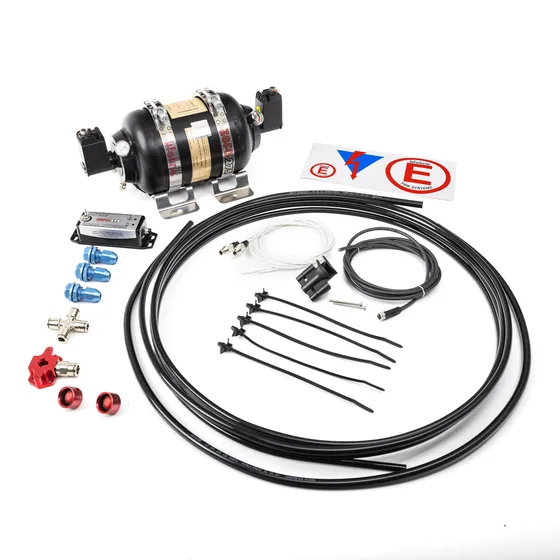
For higher-level motorsport applications, the Lifeline Zero 275 is another option within the Lifeline range.
It is designed around the FIA 8865-2015 standard and is intended for competition applications requiring the relevant level of FIA-approved fire protection.
If you’re building a professional or high-level competition car, the applicable championship regulations should be checked before selecting a system.
Lifeline: Mechanical vs Electrical
| Manual / Mechanical | Electrical | |
| Activation | Pull cable/handle | Push button/switch |
| Simplicity | Very simple, few components | More components and wiring |
| Power dependency | None | Requires electrical power/control system |
| Installation | Cable routing is important | Wiring and connections are important |
| Driver operation | Requires a physical pull | Very easy push-button operation |
| Monitoring | Limited | Can provide battery/circuit status |
| Packaging | Cable routing can be restrictive | Generally easier to package |
| Weight | Often slightly heavier | Can offer weight savings |
| Cost | Lower | Higher |
| Maintenance | Mainly cable/mechanical checks | Electrical connections, power pack and system checks |
| Ideal application | Club/amateur racing, cost-conscious builds | Professional/high-spec cars where weight and integration matter |
Mechanical systems
The main advantage is simplicity. There is no reliance on an electrical circuit, and the activation path is straightforward: the driver pulls the handle and the mechanical system operates the extinguisher.
The main consideration is installation. The cable needs to be routed correctly, avoiding excessive bends, heat and potential damage. Driver positioning is also important so the handle can be reached easily while harnessed in.
For many club-level cars, this makes a mechanical Lifeline system a very practical and cost-effective solution.
Electrical systems
The main advantages are packaging, ergonomics and monitoring. A push-button activation can be very easy for the driver to operate, and there is more scope for system-status indication. The system is generally standalone so there is no need for integration into the car’s electrical systems.
The downside is increased complexity and cost. There are additional electrical components, wiring and connections that need to be installed and maintained correctly.
And finally
If you are looking for a fire suppression system for your vehicle and would like advice, or have a system that needs servicing, please do contact us, and our team would be pleased to help out. Not only can we supply and service the Lifeline fire suppression systems along with the range of Lifeline safety components, but we can also fit the systems in our Derbyshire based Development Centre.